
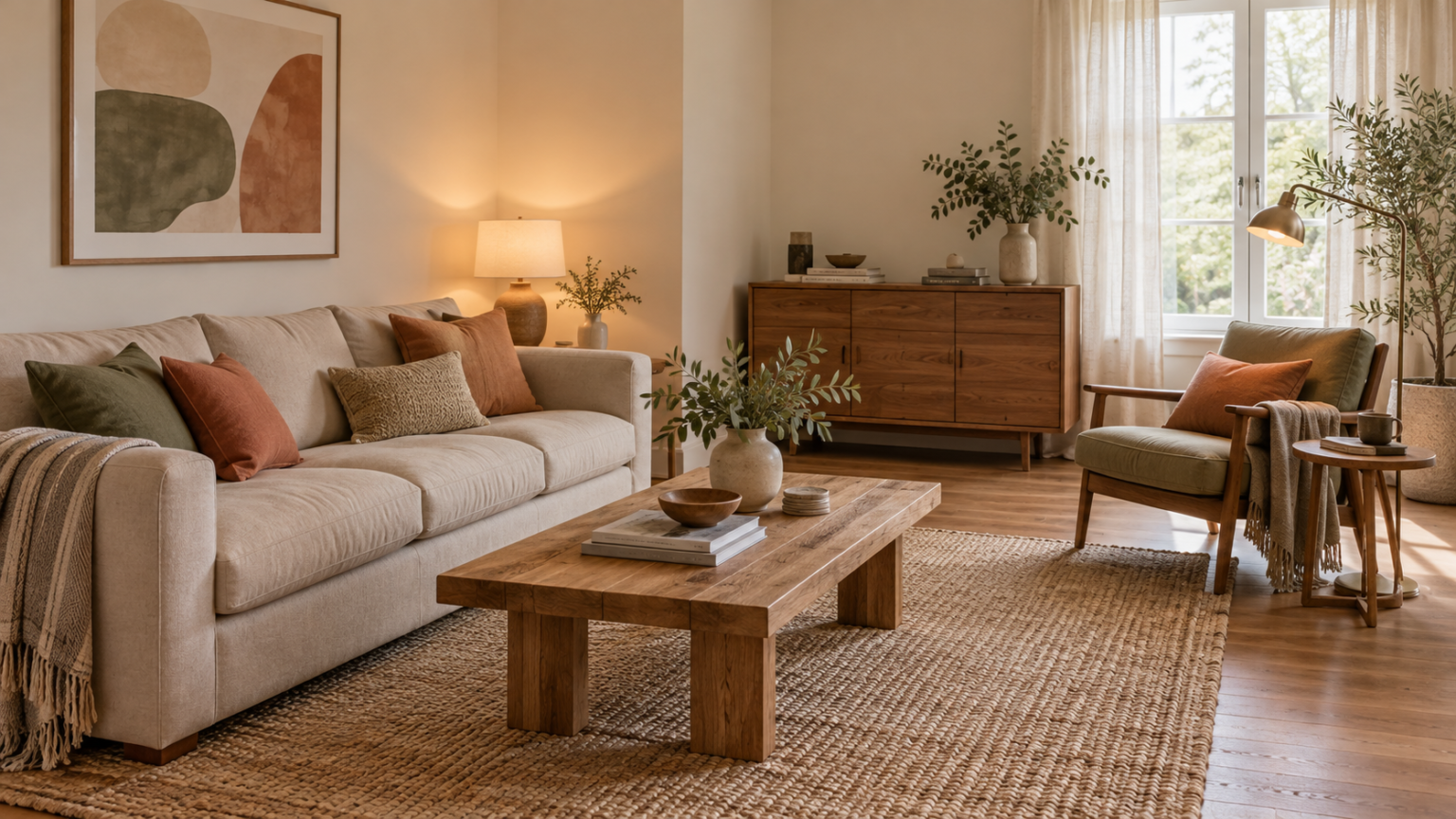

TheHomeTrotters’ home ideas article at thehometrotters.com covers furniture arrangement, layered lighting, mixed textures and storage. To put that inspiration to work, choose one room, identify what makes it awkward to use, and improve that before buying decorations.
Where can you find TheHomeTrotters’ home ideas?
Start with “Blog Home Ideas By Thehometrotters Inspiration”. It brings together decorating suggestions, furniture reuse, lighting and household maintenance. The site’s About page describes its subject as home repair, interior design and decor, with content intended for homeowners and renters.
Check the address when looking for this page: the website discussed here is thehometrotters.com. Similar names appear on other domains, so the name alone does not establish that you are visiting the same publisher.
Use the article as a starting point for choosing a project. The steps below explain how to adapt that inspiration to your own space.
Which room should you improve first?
Choose the room with a problem you notice every day. Write that problem in one sentence: “There is nowhere to put my bag,” “The chair is too dark for reading,” or “The bedroom drawer cannot open fully.” This gives you a clear way to judge whether a change helps.
| Space | A useful first project | Check before adding anything |
|---|---|---|
| Living room | Rearrange existing seating around conversation, reading or watching television | Can you move between the doorway and seats comfortably? |
| Kitchen | Move rarely used items away from your main preparation area | Does each item need to stay on the counter? |
| Bedroom | Reposition furniture or organise an existing drawer | Can doors and drawers open fully? |
| Entryway | Give keys, bags and shoes a defined place | Will the storage obstruct the entrance? |
| Work corner | Position a lamp for the task you do there | Does its placement create glare on your screen? |
Try the change with furniture and containers you already own. Use the room for a few days before deciding what to buy.
How can lighting make the room more useful?
TheHomeTrotters suggests combining overhead lights with table and floor lamps. Apply that idea by identifying where the existing light falls short. A lamp beside a reading chair serves a different purpose from a ceiling light used to illuminate the whole room.
When choosing a bulb, separate brightness from light colour. The U.S. Department of Energy’s buying guidance explains that lumens describe light output, while watts measure power use. Kelvin describes the appearance of the light: its examples identify 2,700 K as warm and 3,000 K as soft.
For a warm-looking living room or bedroom, consider those colour temperatures, then select brightness for the task. Check that the bulb fits the fixture. If the fixture is fully enclosed, verify that the bulb is suitable for enclosed use; if you use a dimmer, check both dimmability and compatibility with the dimming system.
Test one bulb before replacing every bulb in a room. Look at your walls, fabrics and furniture under it in the evening to decide whether you like the result.
How do you add storage without crowding the space?
Start with the objects that lack a home. Measure them, count them and choose where they should be accessible. This is more useful than buying a storage unit and hoping everything fits.
For example, give everyday shoes a defined space near the entrance and keep less frequently worn pairs elsewhere. For a bedroom, measure the clearance beneath the bed before choosing a container. For a shared work area, try a portable box for supplies so the surface can return to another use.
Do not treat freestanding storage as automatically safe without securing it. The U.S. Consumer Product Safety Commission’s Anchor It! campaign advises anchoring furniture with drawers, doors and shelves to the wall to prevent tip-over injuries. Follow the furniture and anchoring-kit instructions when planning its placement.
Which decorating changes should come next?
Once the layout and storage work, choose one visual change. You might reuse a framed picture, move a cushion from another room or pair an existing wooden piece with a different fabric texture.
Take a sample or a photograph of the room when shopping. Compare a proposed purchase with the pieces you plan to keep, rather than choosing every item separately. Before painting, test a sample and view it in daylight and under your evening lighting.
Keep useful older furniture in the plan. If a table fits its purpose and location, try restyling it before replacing it. Check its condition before deciding whether a repair or refinishing project is appropriate.
What should renters check before starting?
Begin with changes you can take with you: rearranged furniture, lamps, textiles and storage that meets its installation requirements. Check your rental agreement and obtain any required permission before painting, drilling or altering fixtures.
For adhesive products, read the manufacturer’s surface and removal instructions before use. Treat permission to install something and suitability for the surface as separate checks.
If a storage unit needs wall anchoring, resolve that requirement before purchasing it. A rental restriction should not become a reason to skip the anchoring instructions.
How do you keep the project within your budget?
Set a spending limit for one defined improvement. Include delivery, tools, fixings and installation where needed, then separate essential purchases from optional decoration.
Before ordering, confirm the item’s dimensions and how it will reach its intended position. For furniture, check the delivery route as well as the final space. For storage, check opening clearances as well as width and height.
Finish the first change and assess it against your original problem. If the drawer now opens, the reading chair has usable light or the entrance has a place for everyday belongings, you have a clear result to build on.
Read more: What Is Gaming Tips PBLinuxTech? A Complete Guide for Gamers